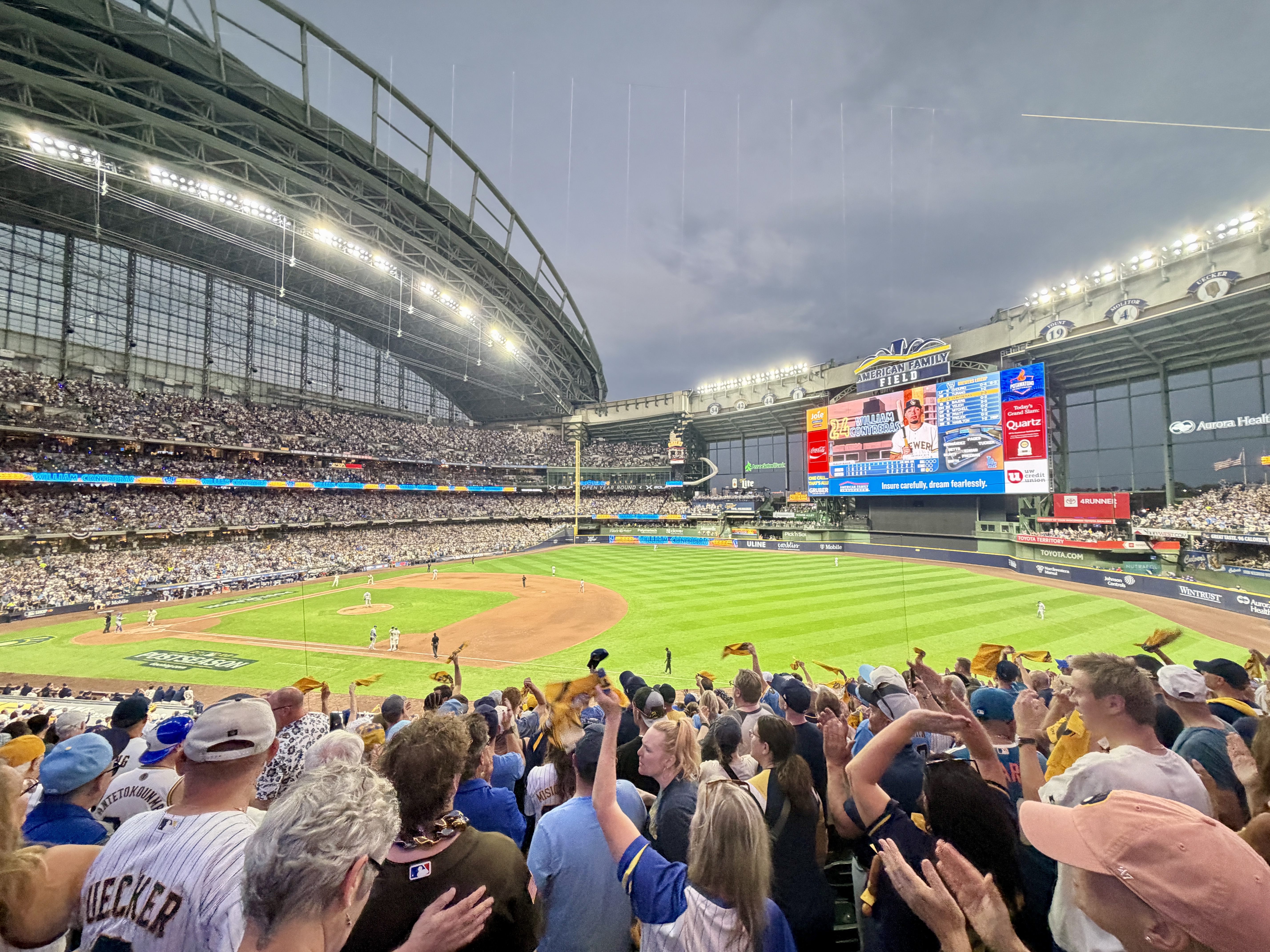
The Brewers won their first World Series on Wednesday, October 28, beating the Rays in five games. They did it from baseball’s smallest market, with a payroll that ranked 19th as of August 31. As a lifelong Reds fan, I’ve watched Milwaukee do this to us for years. They clinched their playoff spot in September by beating us 20 to 0. They keep finding the right players, then getting more out of them than anyone else saw.
I was enamored with what Billy Beane and the A’s were doing when Moneyball first came along. They built teams around players the market undervalued, going against deeply held beliefs about what a good player looked like because the evidence pointed somewhere else. Getting on base seems like an obvious thing to value now. At the time, recognizing how poorly the market priced it gave Oakland a different way to compete, and it changed what the rest of baseball paid attention to.
Milwaukee is pushing that thinking further, into what others have called Moneyball 2.0. The original Moneyball found value the market had missed. The next advance, described in Ben Lindbergh and Travis Sawchik’s The MVP Machine, is understanding players deeply enough to develop them beyond what their records suggest.
Moneyball 2.0 is finding and developing potential that current performance doesn’t reveal.
Pat Murphy, the Brewers’ manager, put it his own way in May. Players can spend years trying to establish themselves before an opportunity brings out something others haven’t seen. “That’s how we do business, some of it out of necessity.”
Two things stand out in how Milwaukee does it. The value shows up in combinations: a pitch that makes sense alongside another one, a hitter whose approach changes with the situation, a third baseman whose range helps the rookie beside him. And the club develops that value through the whole organization, connecting what scouts, analysts and coaches learn about a player to what they do with him.
Every team can see much of the same data. The difference is what Milwaukee chooses to examine, how it reads what it finds and how that turns into decisions across the club. That takes real investment. Despite the smaller payroll, the Brewers rank in the top 10 in both scouting and analytics department size, according to Baseball America. Scouts spot something worth investigating, analysts examine it in depth, and coaches help a player put it to work.
The tools include KinaTrax, which uses AI to turn camera footage into detailed measurements of how players move. The club’s minor-league technology operations posting lists it alongside Hawkeye, Trackman and other tracking systems. The team still has to decide what those measurements mean and what a player should do differently.
The data and AI capability are available. The advantage comes from what you see in it and how you put it to work.
Understand which pitches work for a player, where he should throw them and how each one affects the others, and you might see a very different player, with a different idea of how to develop him.
The pitch you’d have cut
Last season, Quinn Priester’s cutter looked like a pitch you’d stop throwing. It got hit hard and rated poorly on its own. But in a July 2025 analysis, Matthew Trueblood showed how it followed the slider’s early path before the two pitches broke apart, which made the slider harder to recognize before a hitter committed to swinging.
Priester’s slider was drawing misses on 35.1% of swings at that point, up from 25.4% the previous season. Moving toward the middle of the rubber and raising his arm slot helped the two pitches work together. Look at the cutter’s numbers alone, cut it, and you undermine the slider you wanted to keep.
The hits that go the other way
At the plate, Brewers offense and strategy coordinator Jason Lane describes letting the ball travel deeper, so hitters have longer to recognize the pitch and can use the whole field. That matters when defenses shade toward the pull side and leave room the other way. Trying to pull everything forces an earlier decision and leads hitters to chase.
In Ben Lindbergh’s June 2026 analysis of results since 2020, 31.0% of Milwaukee’s balls in play became hits with runners in scoring position, compared with 28.8% without. Their pull-rate ranking rose from 28th to 14th in those situations, when they saw fewer fastballs. The numbers don’t settle on one explanation. Lane’s account shows the depth of the thinking: recognize the pitch, read the situation and use the field, rather than lock every hitter into one approach.
The third baseman and the rookie
On defense, Sports Info Solutions credited Joey Ortiz with seven Defensive Runs Saved in just 58 games at third base this season. His value there also depends on who’s next to him. With rookie Cooper Pratt at shortstop, Ortiz’s range to his left takes pressure off Pratt. Evaluate each player separately and you miss how one player’s strength helps the other do his job.
Where in your business could you apply Moneyball 2.0?
So what are you undervaluing? Most businesses get judged the way the whole industry judges them: the same metrics, each part on its own. Those numbers describe what your business delivered. The potential the Brewers go after sits underneath them, at a finer grain than your reports carry and in combinations across the business that nobody’s paid to notice. The technology to see it exists in your industry too. Three questions to start:
- How could you use the most innovative technology available in your industry to capture and analyze the performance of your business in greater detail and context?
- What would it look like to understand what drives performance in your business as deeply as the Brewers understand their players, individually and in combination?
- What could that understanding allow you to systematically build that competitors couldn’t easily match, even with more money and resources?
From the portfolio
Milwaukee can’t outspend the Dodgers on players, so it spends where the money compounds. The club runs one of the largest analytics departments in the game and a scouting staff to match. Cameras measure how players move all the way down to the minor-league affiliates. Coaches then turn what the analysts find into a different pitch mix, a different approach at the plate or a different pairing on the left side of the infield. The Brewers built the capacity to see more, then got creative with what they saw.
Few companies have built that capacity for their own opportunities. Expertise, headcount, consulting budgets and planning cycles decide which ones get examined and which never start, so most businesses look closely at a handful of bets a year and judge the rest on surface numbers.
AI is doing for this work what cameras and analysts did for the Brewers. Agents can now study a market or a competitor at a level of detail no team could reach by hand, and what they learn stays inside the business and compounds. What would you pursue if your team could take on more? New markets. New ventures. Better customer experiences. Strategic options you haven’t had the capacity to develop.
On November 11, I’m hosting a webinar with Jan Beránek, founder and CEO of FifthRow, the HauerX company that builds that capacity for enterprise teams.
Webinar · Wednesday, November 11 · Noon to 1 p.m. Eastern
Building an Always-On Capability for Innovation and Growth
Jason Hauer, HauerX · Jan Beránek, founder and CEO, FifthRow
AI opens up a different model: always-on strategic work delivered through software, agents, and experienced people, where expertise and learning carry across projects and stay with the business.
What that gives your team:
- More of your opportunities examined. Agents handle the research and the first pass of analysis, so the handful of bets you can afford to study each year becomes most of them.
- Breadth and detail you couldn’t get to before. Research that reads more sources than any team could, goes deeper on each one, and connects opportunities your business has only ever looked at one at a time.
- Always on. The work keeps running between projects and planning cycles, so each round builds on the last and the learning stays with your business.
- Competing without the biggest budget. Work that used to need a bigger team or another consulting engagement becomes a repeatable capability your team keeps.
Jan and I will show how it works, with client examples and a live demonstration. You’ll leave with a clearer view of what your team could take on, which constraints to challenge, and how to redesign the work without giving up human judgment or accountability.
Can’t join live? Register and we’ll send you the recording.
When every competitor can buy the same data and AI, what will you see and put to work that they can’t?